

Nonbinary Nonidentity
Negative Dialectics, Technicity, and Queer Futurity

I stumbled upon a paragraph consisting entirely of sentences beginning with “I refuse.” Coming out as a nonbinary person in 2018 was a manifestation of negativity. This negation, made explicit by the prefix “non-,” was not new. The identification itself did not immediately redefine my subjectivity, since my habits and desires had already long been “queer,” although I did not have a word for them. Similarly, the genealogy of those who organized the possibility of life outside gender binaries predates the popularization of the term.
The particular usefulness of nonbinariness as an idea was that, through its mediation, I could attend to a multitude of negations—of corporeal dysphoria within cisnormative romantic relationships and medical systems; of gendered grammars and their effects on subjectivity and sociality; of biopolitical infrastructures that render certain populations surplus; of everything that came after “I refuse” in that coming-out post—without flattening them. Nonbinariness has been a diagram I inhabit, mapping the homology of these heterogeneous instances of violence organized through the gender binary and orienting my attention accordingly. I could therefore survive “in but not of” the binary regime.
In my critique of affirmative and representational projects of queerness, I examined what happens to negativity in its reification within institutional milieus, ranging from the celebration of queer art in the art world, to the dropdown menu of gender identities on Hinge, to marriage equality. As Lee Edelman argues, the negativity of the queer is compromised when it is fixed into a “determinate stance or ‘position’ whose determination would thus negate it [the negativity itself]” (Edelman 2004, 4), a process accelerated under liberal discourses of recognition.
This is why the first step in my theoretical inquiry into the revolutionary potentiality of the nonbinary should begin with the prefix “non-” and the negation it indicates. This question works in tandem with a number of critical accounts of its “binary” counterpart—what “non-” negates—such as the work of Paul B. Preciado on the pharmacopornographic regime, and it informs how nonbinary life and practices can be mobilized toward transformation. My interest in negation stems from Theodor W. Adorno’s negative dialectics, where “every individual determination” is understood not merely as “a negation of that individual determination but also as itself the negative” (Adorno 2019, 241). My aim in this text is to attend to the negativity immanent to nonbinary subjectivity through this materialist framework, making available another pathway between queer theory and the critique of political economy.
Given these contexts, this project is inevitably concerned with futurity, as Adorno suggested that “the subject’s nonidentity [which negativity reveals without resolution] without sacrifice would be utopian” (Adorno 1990, 281). José Esteban Muñoz appropriates the dialectical tradition of negative utopianism, especially that of Ernst Bloch, in his study of queer futurity, where “the negative becomes the resource for a certain mode of queer utopianism” (Muñoz 2019).
Queerness, for Muñoz, is an ideality that is “not yet here,” drawing on the utopia that Bloch and Adorno negatively defined. In their conversation, the two Marxist thinkers situate utopia in negation: “utopia is … in the determined negation of that which merely is, and by concretizing itself as something false, it always points at the same time to what should be” (Bloch 1989, 11). As Muñoz argues, “we are not yet queer,” even in this historically specific moment in which an unprecedented number of people actively imagine life outside the gender binary, since the term nonbinary did not produce that negativity but rendered a preexisting operative structure legible.1 If so, how can we attend to, and work with, the immanent negativity of the prefix “non-” toward the utopian horizon of queerness without collapsing it into yet another identity category?
To pursue this question, the text first distinguishes three different responses to gender’s constitutive negativity: the reactionary attempt to expel contradiction from identity, read through Brian Massumi’s account of the Man-Standard and negative prehension; Lee Edelman’s absolutization of queer negativity against reproductive futurism; and José Esteban Muñoz’s negative-utopian use of negation as a resource for queer futurity. From there, I turn to the body as a utopian horizon, reading hormone replacement therapy through Massumi’s process ontology of N sexes, and Jules Gill-Peterson’s account of originary technicity, in order to argue that nonbinary nonidentity is not merely conceptual but materially operative through technical, racialized, and biopolitical infrastructures. Finally, I extend this account into a speculative and science-fictional register, drawing on Massumi’s theory of qualitative surplus and Ursula K. Le Guin’s non-Euclidean utopia, to ask what kind of speculative practice can attend to the surplus of the “non-” without converting it into either an identity category or a quantified value-form. Across these movements, nonbinariness is treated not as a stable position beyond the binary, but as a negative-dialectical, technical, and speculative practice of sustaining nonidentity toward a not-yet.
Against, Within, and Through Negativity
In discussing the negative dialectics of the nonbinary, it is crucial to recognize the negations already constitutive of the gender binary that the nonbinary negates. Omitting this risks naturalizing that negativity instead of treating it as a historically specific condition produced through exclusion. Lee Edelman recognizes a certain negation as endemic to queerness. In his framework, queerness is produced within normativity as its constitutive outside: “the queer’s abjectified difference… secures normativity’s identity.” Queerness here does not introduce negativity into the social field but is constituted through it, in the place assigned to what must be excluded for that field to cohere. As Edelman puts it, queerness “marks the place of the gap… from which [the social order] can never escape,” a structural remainder rather than a positive identity (Edelman 2004, 26).
Normative identities thus stabilize themselves against queerness as “the negativity opposed to every form of social viability” (Edelman 2004, 9). This is consistent with how Brian Massumi discusses the identity of Man as a negatively constituted category, which he calls the Man-Standard after Gilles Deleuze and Félix Guattari. It is intensively expressed in the very present moment, where certain normative categories of gender exemplified by MAGA masculinity function jointly with the resurgence of fascism worldwide. He uses the ironic case of Nick Fuentes, an incel influencer who faced suspicion from his audience about the authenticity of his involuntary celibacy. He had to defend himself by making a preposterous statement about his misogynistic purity: “What? People calling me gay because I’ve never had a girlfriend? I think if anything—if anything—it makes me less gay. If anything it makes me not gay. As opposed to less gay. Not that there’s any gay, but it makes me not gay … It’s the reverse. That actually makes me really more heterosexual, because honestly, dating women is gay.” To understand the paradoxical character of identity here, Massumi draws on A. N. Whitehead’s notion of negative prehension, showing how masculinity is constituted through what it rejects, such that “Man is dependent on its othering of Woman for its own formation” (Massumi 2025). Seen through this lens, gender is a normative operation structured through exclusion and internal contradiction with an immanent instability: “the more he pulls to the masculinist extreme of the Man-Standard, the more he is pulled away from it, toward the constituent subcategories it embroilingly defines itself against.”
My interest here is to understand this constitutive negativity of gender—Edelman traces this through psychoanalysis, and Massumi does so through Whitehead’s process ontology as well as the poststructuralist idea of ex-inscription—in relation to my aforementioned question of negation that the prefix “non-” announces, drawing on Muñoz-inspired dialectics despite their heterogeneous theoretical genealogies. In all these cases, gender, as a social construct that fails to coincide with itself, aligns closely with what Adorno would call nonidentity. In Massumi’s account, “once something is ex-inscribed in you, you can’t will it away… you can’t un-negatively prehend,” and “two negative acts don’t make a positive one.” Masculinity’s identity crisis is immanent to its structure and refractory to closure, as in Fuentes not being able to “cut out a cut-out without just making it bigger.” This echoes Adorno’s insistence that dialectics proceeds from nonidentity; negative dialectics was his critique of affirmative dialectics, which conflated the “negation of negation” with the positive.
What is notable here is that these experiences of gender’s nonidentity—not commensurable, yet certainly interrelated—are followed by different negative acts in response: for Fuentes, as analyzed by Massumi; for Edelman; and for Muñoz. This divergence results in the category of involuntary celibacy as most masculine and least gay, the rejection of “reproductive futurism” for Edelman, and the prefiguration of queer utopia for Muñoz.
Fuentes negates the very appearance of nonidentity in an attempt to distill identity without contradiction. This not only deepens ex-inscription, as Massumi demonstrates, but also importantly exemplifies a specific kind of rejection of dialectics. The contradiction he tries to uproot is “nonidentity under the aspect of identity,” an effect of “the dialectical primary,” which “makes the thought of unity the measure of heterogeneity” (Adorno 1990, 5). In contrast, Edelman affirms the irreducibility of negativity, but in doing so, he then makes negativity itself into the quasi-teleological truth of queerness. He suggests embracing the “ascription of negativity to the queer,” in refusal of “the insistence of hope itself as affirmation, which is always affirmation of an order whose refusal will register as unthinkable, irresponsible, inhumane.” By doing so, one can finally attend to “the persistence of something internal to reason that reason refuses, that turning the force of queerness against all subjects, however queer, can afford an access to the jouissance that at once defines and negates us.” What he calls jouissance here is constant and inescapable in the very social order under which queerness is made abject.
This embrace “can have no justification if justification requires it to reinforce some positive social value,” and he finds its value “in its challenge to value as defined by the social, and thus in its radical challenge to the very value of the social itself.” He diverges from Adorno’s negative dialectics, where critique could orient itself toward a determinate good or future. Queerness, according to Edelman, “would deliberately sever us from ourselves, from the assurance, that is, of knowing ourselves and hence of knowing our ‘good.’” Thus, he refuses the very logic of futurity, which he calls “kid stuff,” since that futurism is inevitably “reproductive,” and “queerness names the side of those not fighting for the children” (Edelman 2004, 3–6). Edelman’s use of negation is not dialectical in this sense, because he refuses the mediation through which dialectics sustains contradiction as historically dynamic. In his account, negativity is not unlike another identity, but an absolute condition aligned with jouissance, which neither resolves nor opens onto transformation.
Following Muñoz, I argue that the transformative potentiality of the prefix “non-” is only accessible when it is distinguished from Fuentes’s attempt to expel negativity and Edelman’s attempt to absolutize it. Muñoz locates his project of queer utopia precisely in that “impossible performance of the negation of the negation.” Negativity is treated as a resource, “a critical means of working with and through negation” (Muñoz 2019). His negation is dialectical in the negative-dialectical sense: it preserves contradiction toward a horizon that cannot be positively resolved. This triangulation thus offers a critical foundation from which I will speculate on a queer materialist account of nonbinary potentiality, where the “non-” no longer names only the negation of the binary but a technical and bodily capacity to sustain nonidentity as a field of emergence.
The Body as a Technical Horizon
“It is important not to hand over futurity to normative white reproductive futurity. That dominant mode of futurity is indeed “winning,” but that is all the more reason to call on a utopian political imagination that will enable us to glimpse another time and place: a “not-yet” where queer youths of color actually get to grow up. Utopian and willfully idealistic practices of thought are in order if we are to resist the perils of heteronormative pragmatism and Anglo-normative pessimism. Imagining a queer subject who is abstracted from the sensuous intersectionalities that mark our experience is an ineffectual way out. Such an escape via singularity is a ticket whose price most cannot afford. The way to deal with the asymmetries and violent frenzies that mark the present is not to forget the future. The here and now is simply not enough. Queerness should and could be about a desire for another way of being in both the world and time, a desire that resists mandates to accept that which is not enough.”
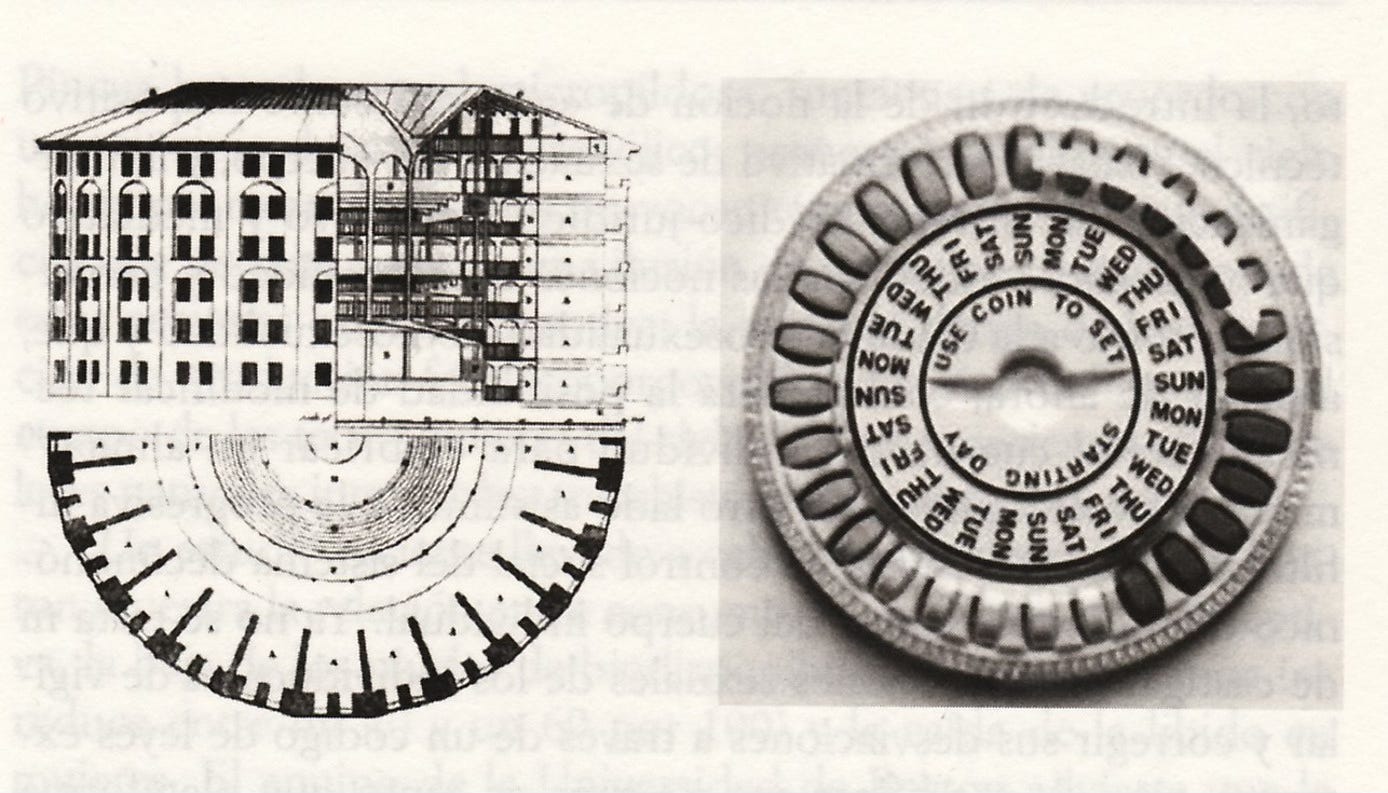
Muñoz is critical of Edelman’s immediate binding of “the future of the child as futurity” to white and straight time, which “accepts and reproduces this monolithic figure of the child that is indeed always already white.” He importantly reminds us: “The future is only the stuff of some kids. Racialized kids, queer kids, are not the sovereign princes of futurity” (Muñoz 2019). My experience of taking estrogen supplements for the last two years exemplifies a related subject, not only a kid denied futurity but also an adult in their second puberty. The back of the tablet indicates the days assigned to each pill, which has not been particularly useful in my case. The inscription was made for those going through menopause, who are supposed to take one pill a day, whereas I had to take one every morning and another every evening for my hormone replacement therapy (HRT) as a trans person. Consequently, it gave me the impression that my time was running twice as fast as straight time, toward the future of bodily indeterminacy. This technology I use for queer futurity is genealogically rooted in the contraceptive pill container as “a prosthesis for women’s lack of memory and responsibility,” subordinating their endocrinological rhythm to the biopolitical project of making certain populations less fertile (Preciado 2018). The device that enforces reproductive futurity has an immanent negativity that can be mobilized toward non-reproductive, queer temporality.
